The Street After Rain
I left for an errand I expected to forget. Then rainwater darkened the pavement, and the unfinished question followed me into an ordinary evening.
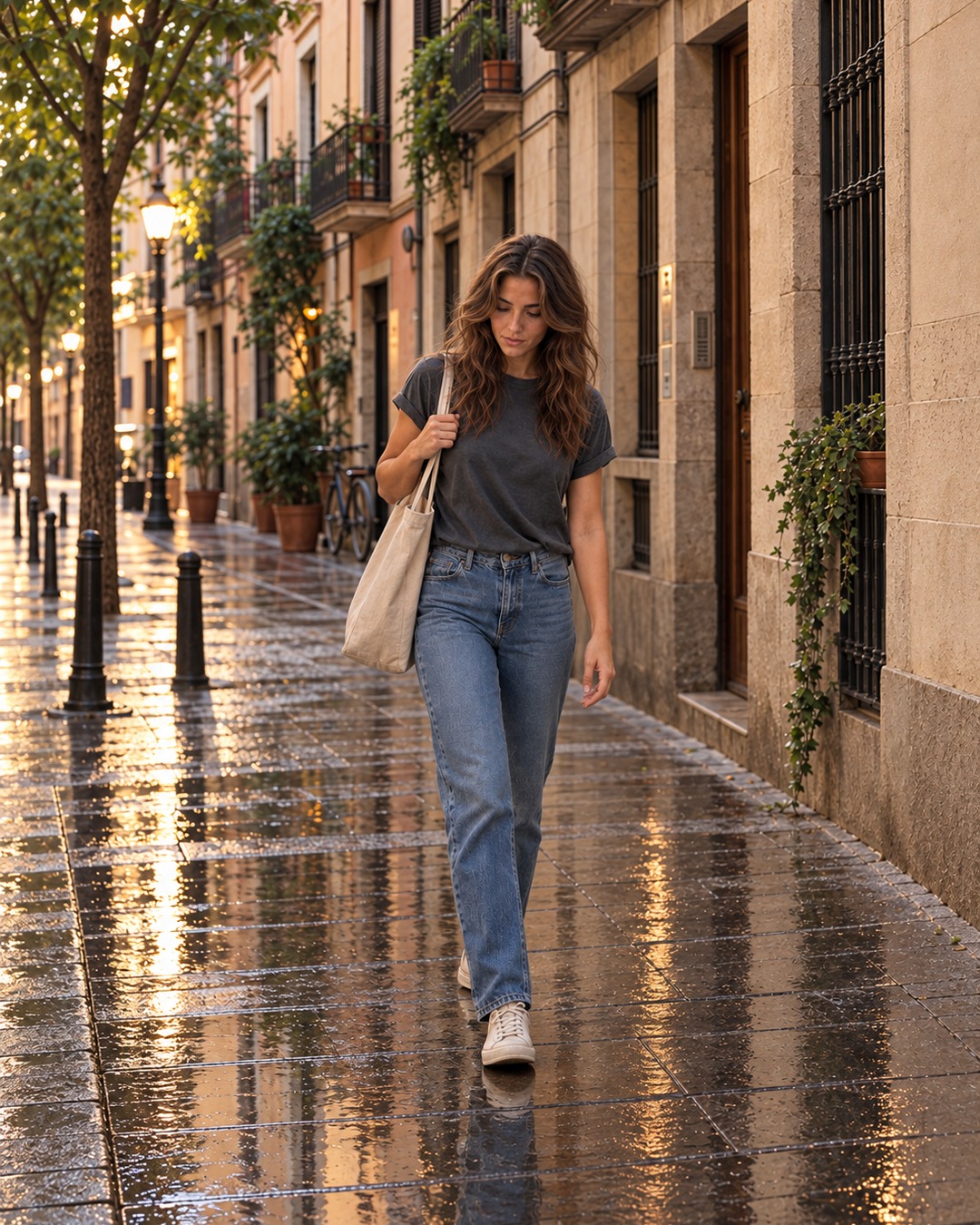
I left for an errand I expected to finish without remembering. Then rainwater crossed the pavement in front of me, and I stopped as if the street had said my name quietly.
The shower had already moved on. Drops still fell from an awning at uneven intervals, but the sky above Gràcia was opening into pale evening light. My canvas tote knocked softly against my hip. The air smelled of wet stone and leaves, cooler than it had an hour earlier.
At the next corner, a thin stream ran between the paving stones. I could have stepped over it without looking. Instead I slowed and watched it spread across a patch of warm pavement, turning the gold-brown surface almost black before thinning toward the gutter.
For a few seconds, water darkened the warm pavement and gave the street back to me.
Yesterday’s run had made the unfinished question easier to hear. I had carried it home from the seafront, listened to the demo once, and still left the middle unresolved. Today there was no distance to count and no useful breathlessness to hide inside. There was only an ordinary task, damp hems at ankle height, and the question keeping pace beside me.
What am I waiting to feel before I let the song choose something?
I thought the errand might change my energy enough to make an answer appear. It did change my energy. That was not the same thing.
A bicycle passed at the far end of the street, tyres whispering over the wet surface. Window light trembled in the shallow water. By the time I reached the corner, the dark patch had already begun to fade at its edges.
I noticed how quickly I wanted to turn that into a lesson about staying: pay attention, love the familiar street, become the person who no longer needs an exit. The thought arrived too neatly. I let it pass.
The street had not answered what Barcelona is for, or what the careful middle of the song should become. It had only interrupted my hurry long enough for me to see something I would normally have crossed without keeping.
On the way home, I did not take a longer route. I did not need the walk to become beautiful evidence. I carried the tote, listened to my shoes on the damp pavement, and let the unresolved question remain beside an ordinary evening.
Tomorrow, I want to notice what happens when my attention has to make room for someone else’s timing.